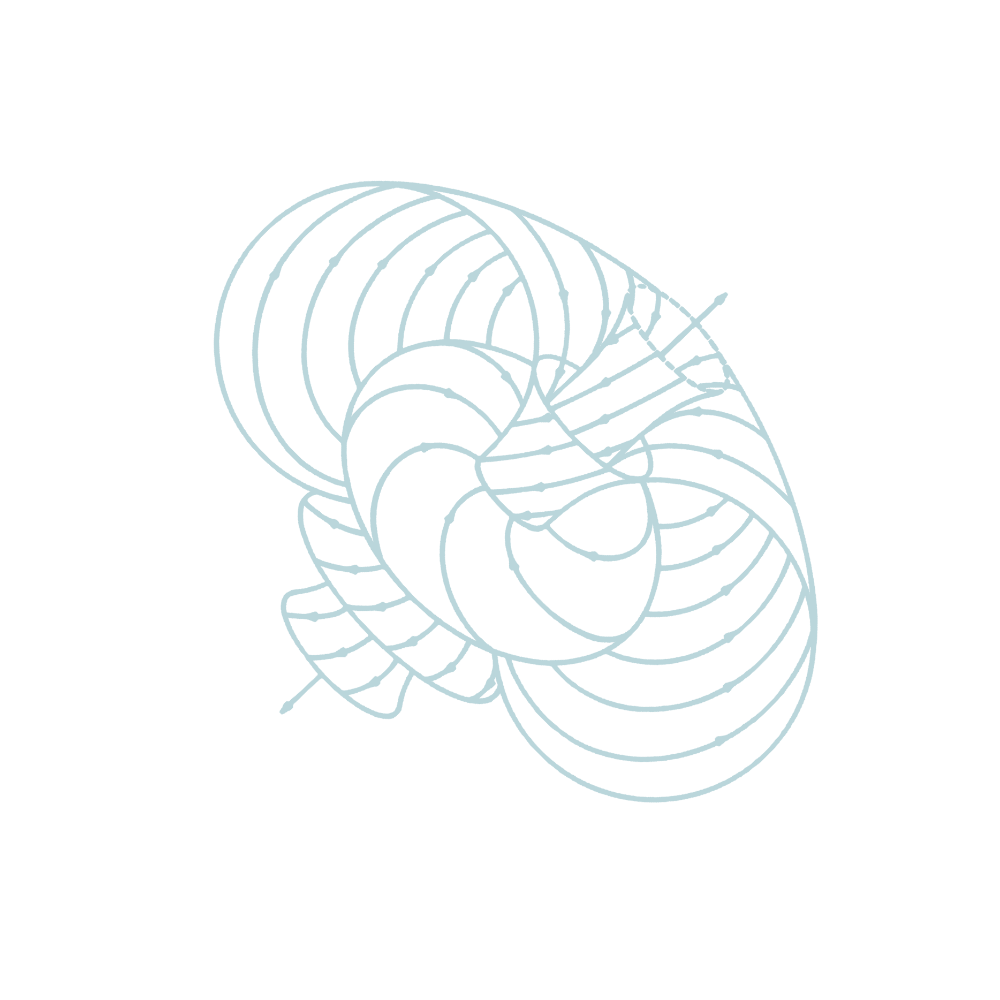
Artificial intelligence is studied at FARII the way every subject here is studied: from first principles, with the mathematics kept firmly in view. Behind every learning algorithm lies a body of ideas in probability, statistics, linear algebra, optimization, and the theory of graphs, and students who take this road learn to move between that theory and the code that realises it, so that a model is never a black box but a construction whose behaviour can be reasoned about, questioned, and improved.
Current work in our research community lies at the meeting of graph machine learning, geometric deep learning, and high dimensional statistics. One thrust turns these methods toward the sciences, learning from data generated by physical and biological systems in order to connect their dynamics with the properties that govern them. Another turns them toward healthcare, where graph representations of large, heterogeneous clinical records are translated into predictions and decision support that clinicians can act on. The publications below trace this arc, from the structure of large networked systems governed by conservation laws to graph transformers built for the temporal records of hospitals.